


Description
A Battery Does Not Die. It Is Murdered. The leading cause of premature battery failure is not age, not temperature, and not manufacturing defects. It is incorrect charging. Voltage that is too high cooks the electrolyte. Voltage that is too low crystallizes sulfate on the plates. Current that arrives too fast warps the grid. The Pulse Keeper was designed by engineers who understand that charging is not a brute-force act of shoving electrons into a box — it is a precision medical procedure performed on an electrochemical patient.
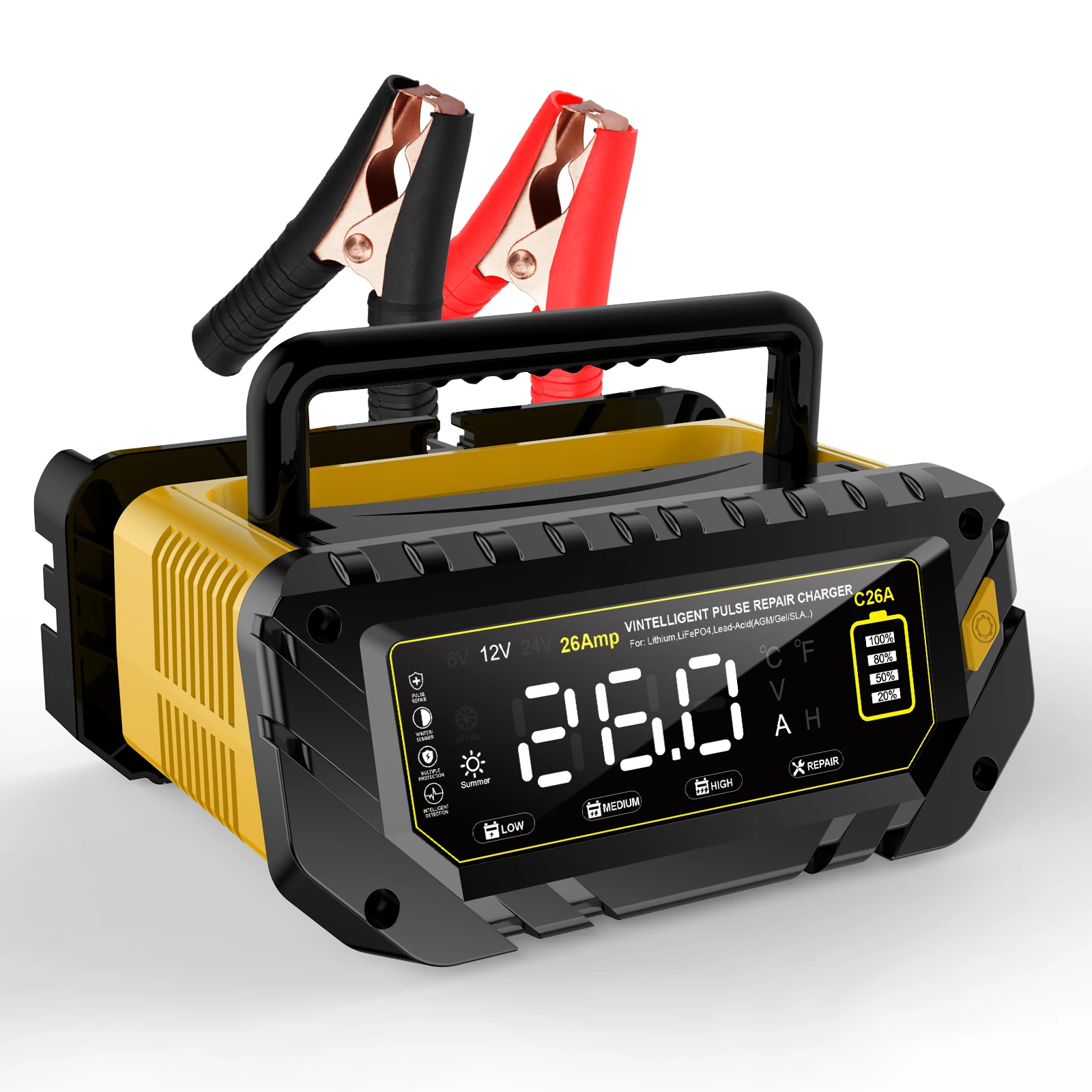
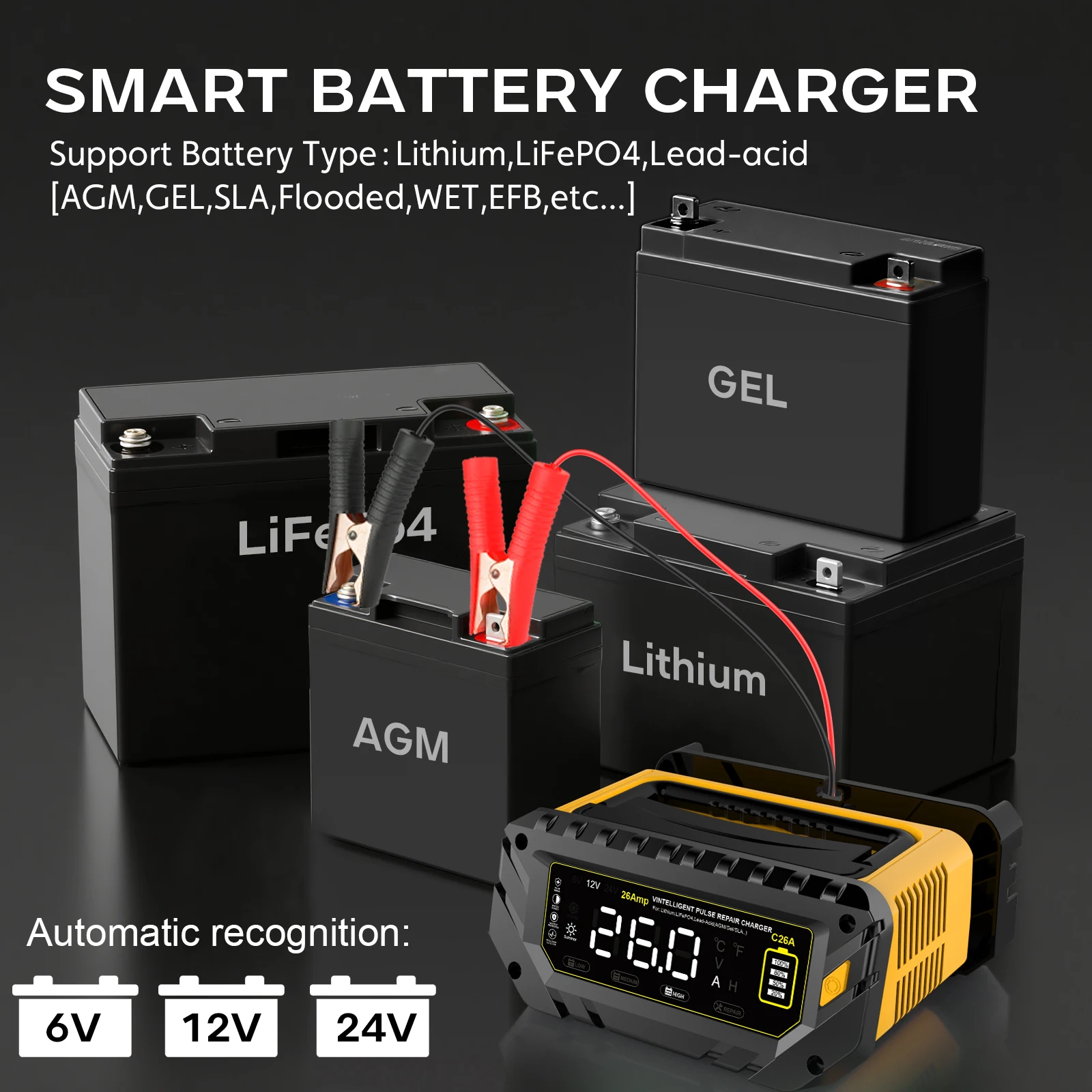
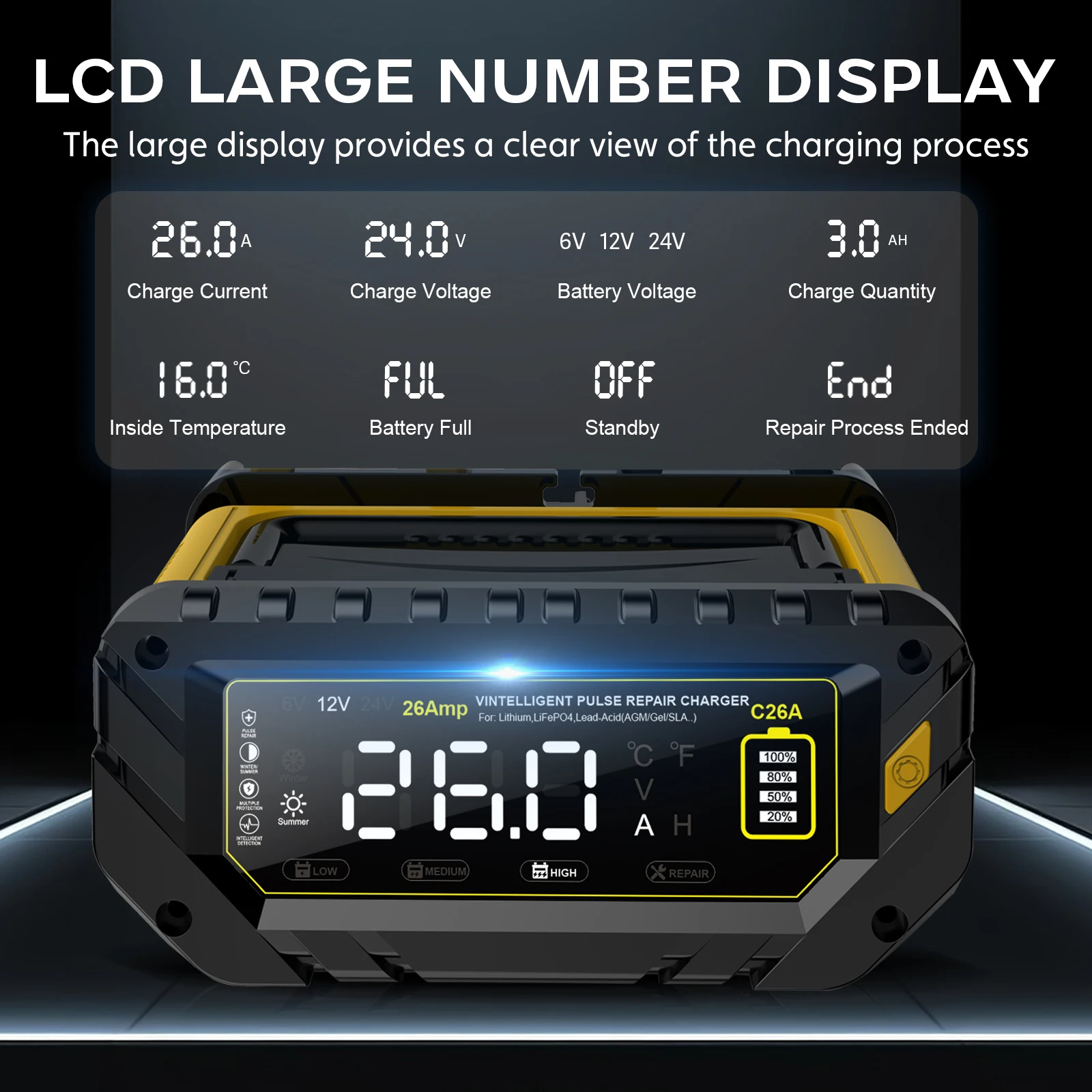
The 7-stage intelligent charging algorithm is the heart of this device: Desulfation, Soft Start, Bulk Charge, Absorption, Analysis, Recondition, and Float/Maintenance. Each stage serves a specific electrochemical purpose, and the LCD display shows real-time voltage, current, charge percentage, and stage progression so you are never guessing about what the charger is doing. It handles 6V, 12V, and 24V batteries automatically — no manual voltage selection needed — and supports flooded, AGM, gel, calcium, and lithium (LiFePO4) battery chemistries through a dedicated mode button.
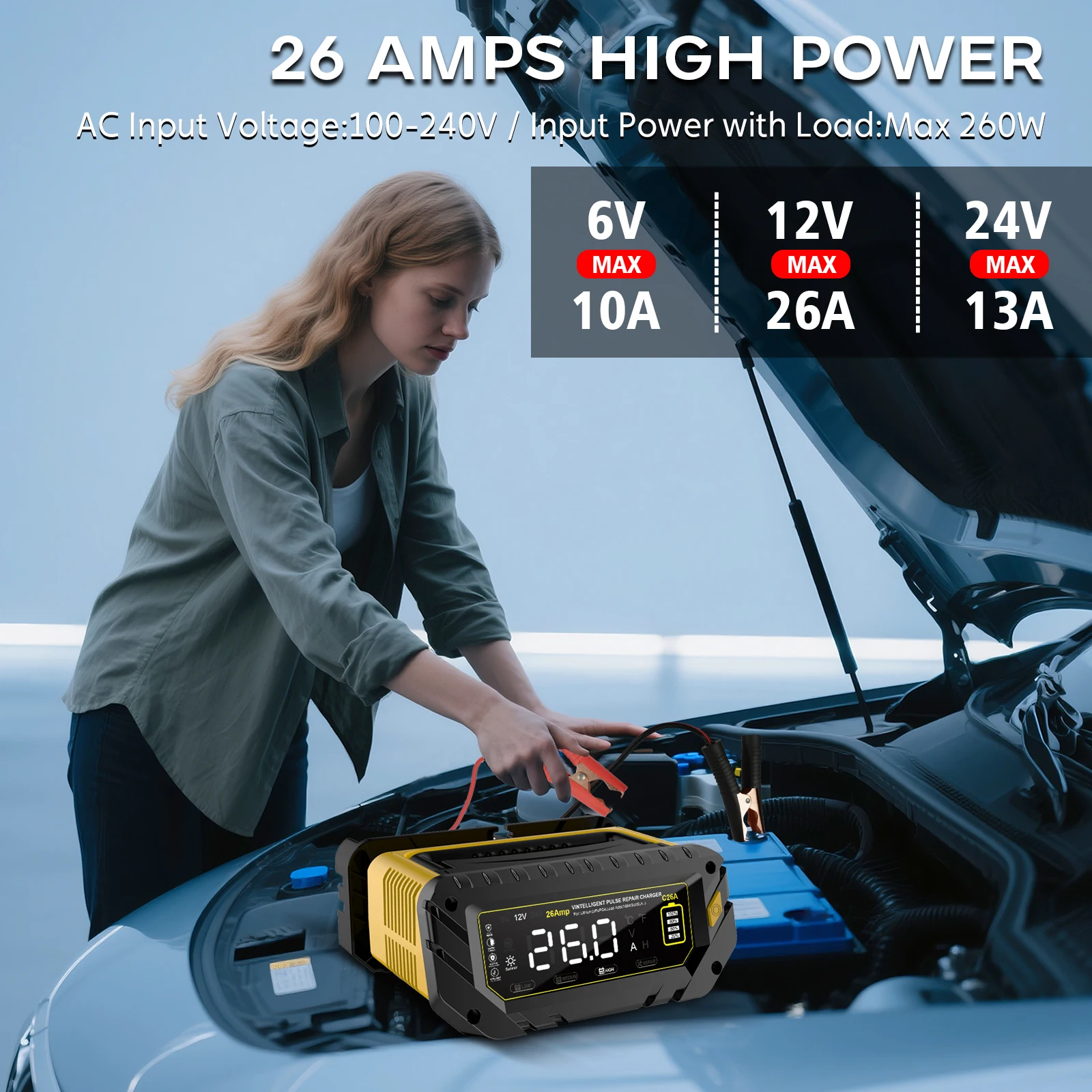
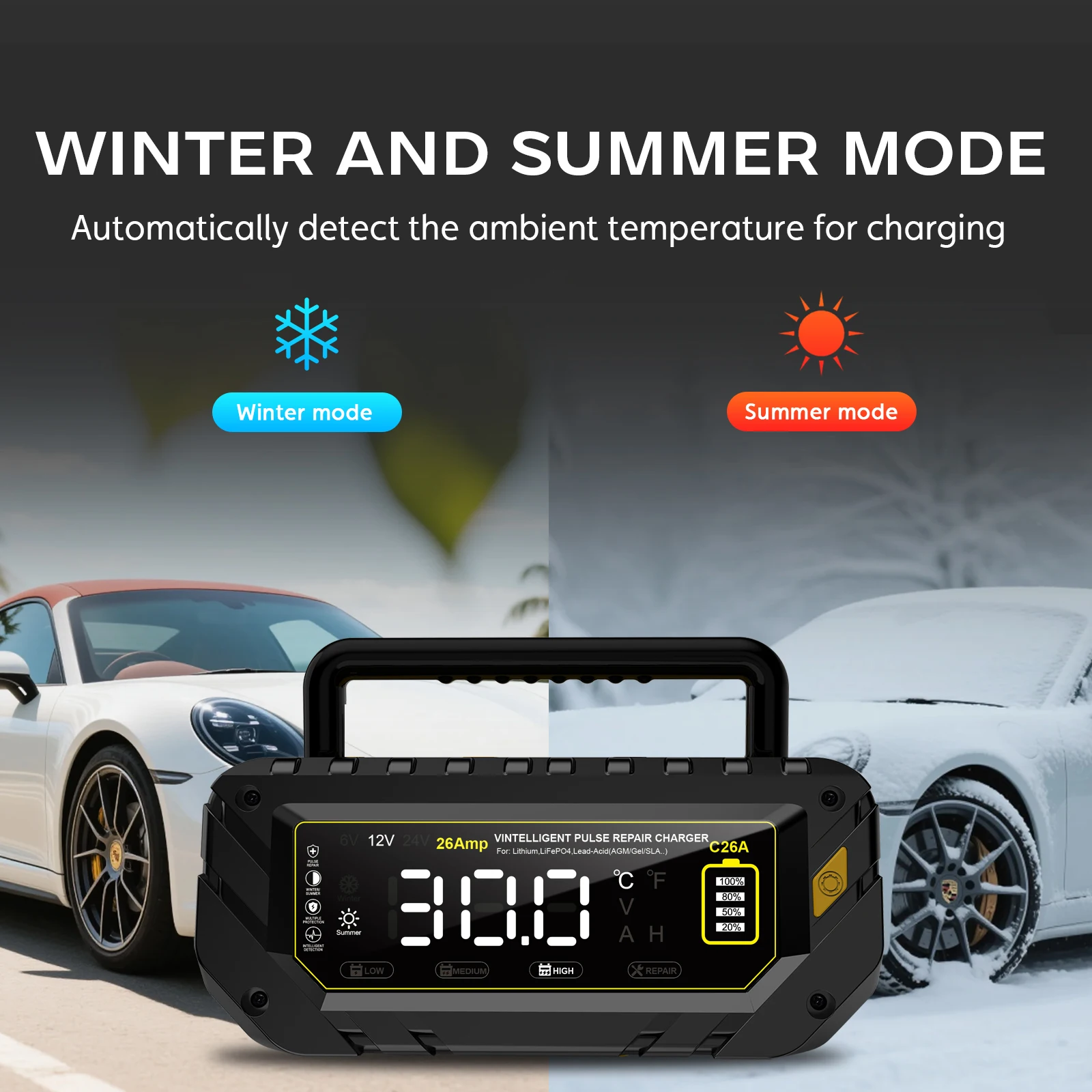
At 30 amps maximum output, the Pulse Keeper can fully charge a depleted 100Ah deep-cycle battery in under 4 hours, or maintain a vehicle starting battery indefinitely in float mode. The pulse-repair function delivers high-frequency pulses that break down lead-sulfate crystals on aged batteries, recovering capacity that conventional chargers abandon as "permanent loss." Winter mode adjusts the charge voltage curve for sub-zero temperatures, and the IP65-rated housing means this charger lives in the garage, not in a drawer.
A battery tender keeps it alive. The Pulse Keeper brings it back from the dead.
Key Features
- ✦ 7-stage intelligent charging: Desulfation → Soft Start → Bulk → Absorption → Analysis → Recondition → Float
- ✦ Auto-detection: 6V / 12V / 24V batteries — no manual switching
- ✦ Multi-chemistry: Flooded, AGM, Gel, Calcium, LiFePO4 (lithium)
- ✦ Large backlit LCD — real-time V, A, %, and charge stage display
- ✦ Pulse repair mode — recovers sulfated batteries by breaking down crystal deposits
- ✦ Winter/temperature-compensated charging mode
- ✦ IP65 weather-resistant — safe for garage, workshop, and outdoor use
Technical Specifications
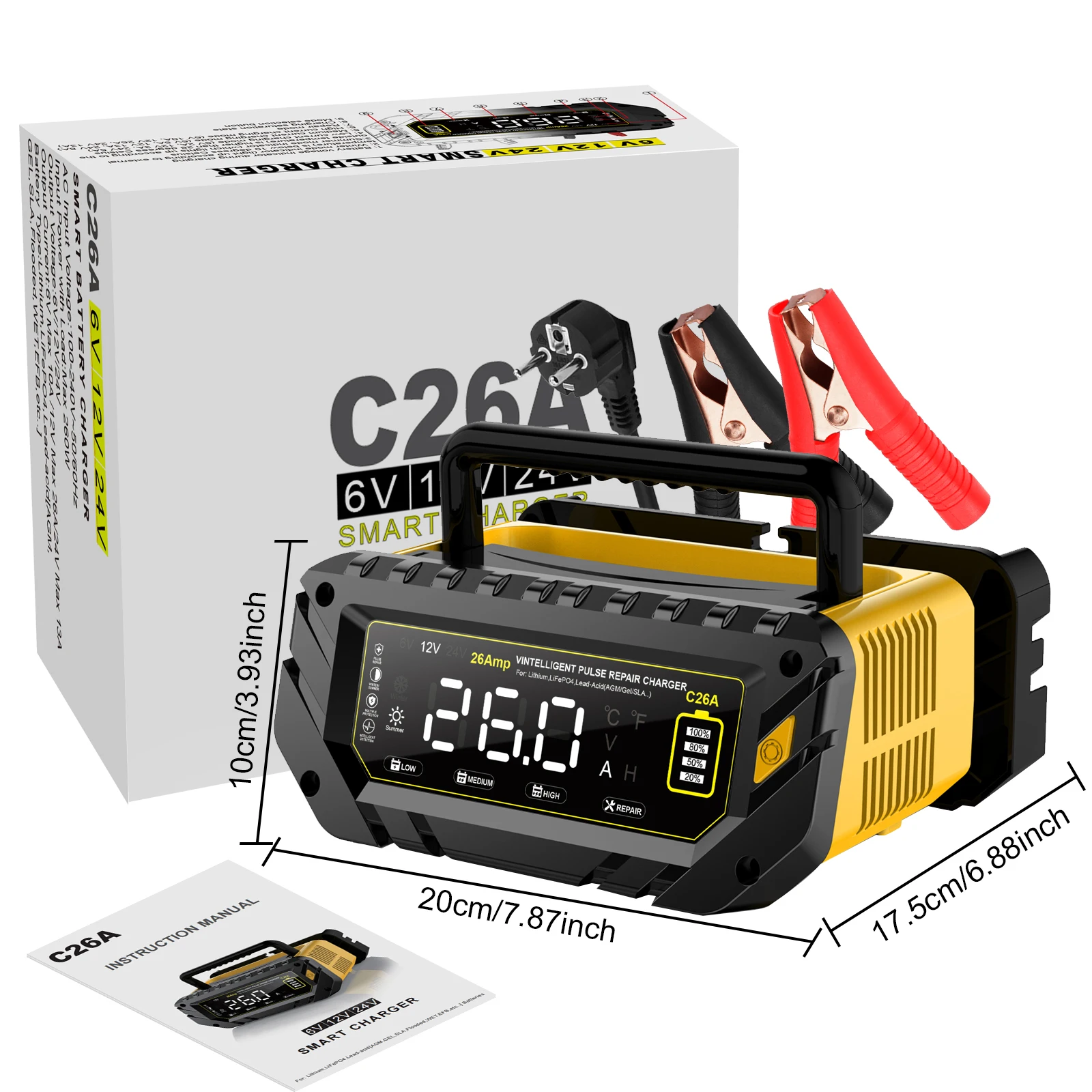
- Input Voltage: 110V–240V AC, 50/60Hz
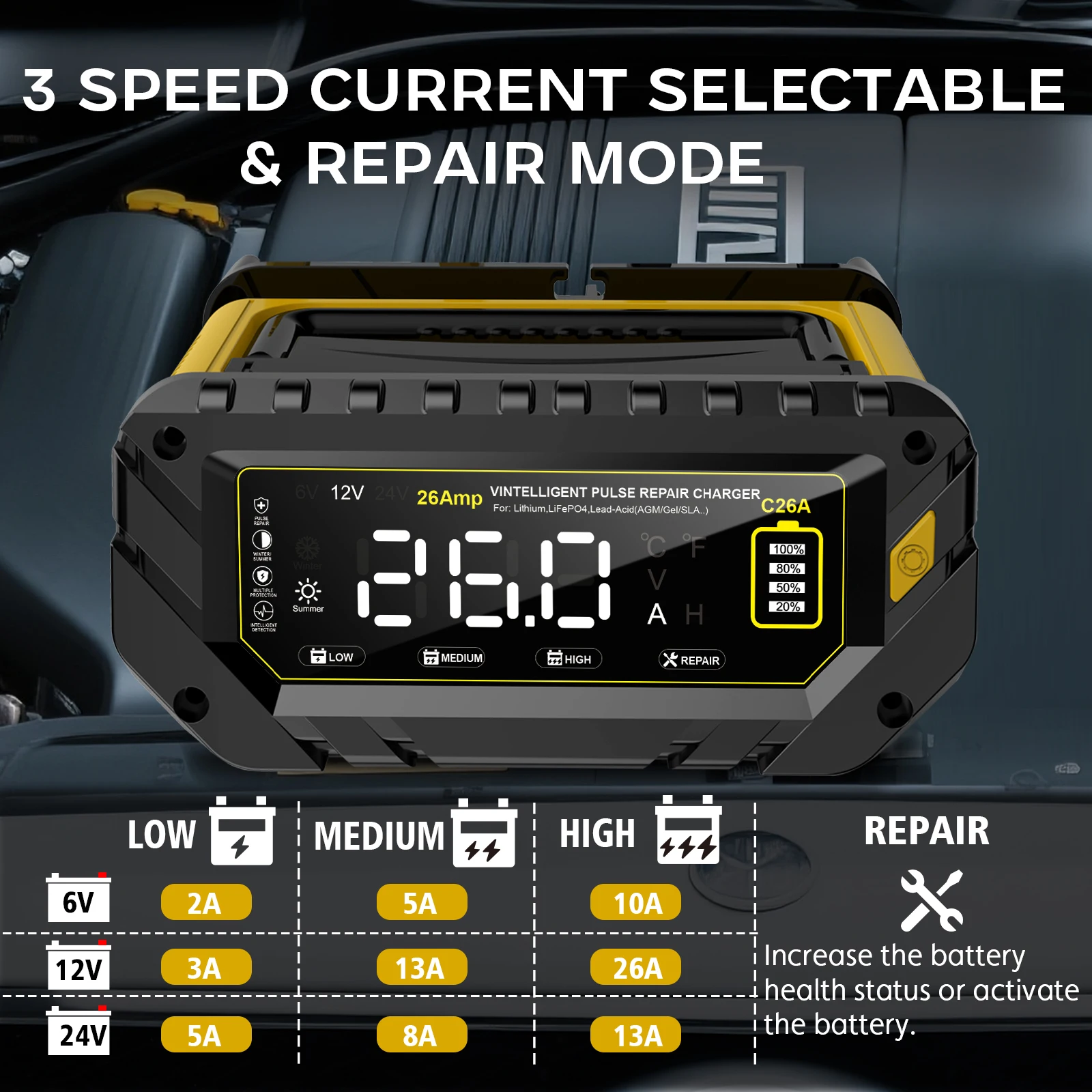
- Output Current: 30A / 26A / 20A (selectable)
- Supported Voltages: 6V / 12V / 24V (auto-detect)
- Battery Types: STD, AGM, Gel, Calcium, LiFePO4
- Charging Stages: 7-stage intelligent algorithm
- Display: Backlit LCD (V, A, %, stage)
- Protection: Reverse polarity, overheat, short-circuit, overcharge
- Weather Rating: IP65
- Battery Capacity Range: 20Ah–300Ah
- Cooling: Active fan cooling with thermal speed control
Application Scenarios
The Pulse Keeper is the charger of choice for automotive shops, motorcycle maintenance, marine winterization, RV battery care, farm equipment, and fleet vehicle management. Its 30A output handles heavy-duty deep-cycle and truck batteries, while the low-current maintenance mode keeps seasonal batteries (boats, classic cars, lawn tractors) in peak condition through months of storage. The lithium mode makes it future-proof for the growing number of vehicles and accessories migrating to LiFePO4 starting and auxiliary batteries.
Frequently Asked Questions
Q: Can this charger recover a completely dead battery that reads 0V?
A: Partially. If the battery voltage is below 2V (severe sulfation), the Pulse Keeper's desulfation mode will attempt a low-current pulse recovery. Success depends on how long the battery sat discharged and the extent of plate damage. Batteries below 1V with visible swelling or physical damage should be replaced, not charged.
Q: Is it safe to leave connected indefinitely in maintenance mode?
A: Yes. Once the battery reaches full charge, the Pulse Keeper automatically transitions to float/maintenance mode, delivering a precise trickle voltage (13.6V for 12V batteries) that counteracts self-discharge without overcharging. It is designed for permanent connection on seasonal vehicles and backup generator batteries.
Q: Does lithium (LiFePO4) mode work differently from lead-acid modes?
A: Yes. Lithium mode uses a constant-current/constant-voltage (CC/CV) profile with no float stage, because LiFePO4 batteries do not self-discharge significantly and should not be held at elevated voltage. The charger automatically disconnects at 14.4V and will not re-engage until the battery voltage drops below 13.2V.
Q: What's the difference between 30A, 26A, and 20A modes?
A: Current selection lets you match the charge rate to your battery's capacity. For a 100Ah battery, 30A (0.3C rate) is safe and fast. For smaller motorcycle/scooter batteries (10–20Ah), use 20A mode to avoid excessive charge current. The charger remembers your last setting.
Q: Will this work as a power supply for diagnostics or programming?
A: The Pulse Keeper is primarily a battery charger, not a regulated DC power supply. For ECU programming or vehicle diagnostics that require a stable 13.5V–14.0V power supply with ripple under 100mV, use a dedicated bench power supply. The charger's voltage varies by stage and chemistry mode.




Customer Reviews
Payment and Security
Vos informations de paiement sont gérées de manière sécurisée. Nous ne stockons ni ne pouvons récupérer votre numéro de carte bancaire.